author
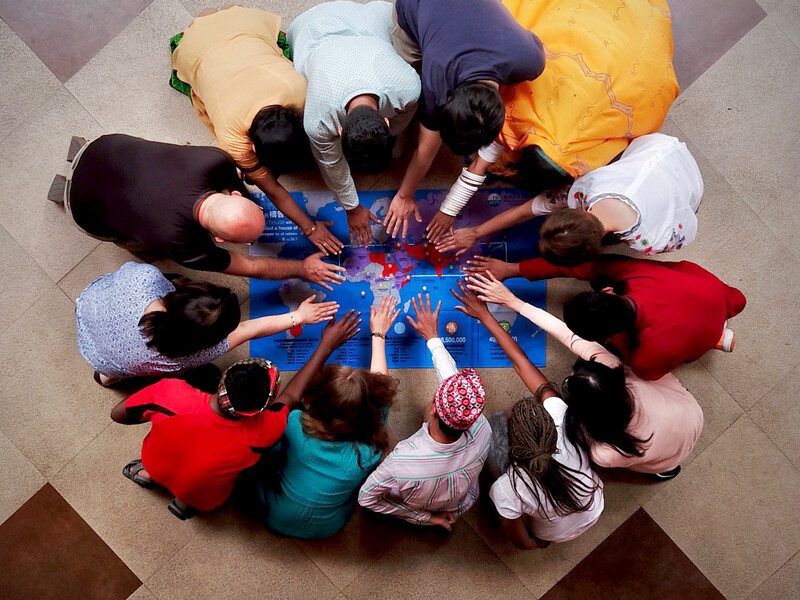
I find deep meaning and encouragement in metaphors. They have a remarkable way of capturing my attention and conveying powerful truths in ways that can significantly change how I see things. Often, when we enter a new culture or community, we are encouraged to listen to and learn from new metaphors, because frequently, they convey levels of meaning that enable us to work more fruitfully in that context.
While this is true of cultural metaphors, I believe it is even more the case with biblical metaphors: They can transform our hearts and minds if we let them. One that I have been pondering lately is the royal priesthood, mentioned in 1 Peter 2:4-10.
A Once-Limited Priesthood
The reason this priesthood metaphor captures my attention is how different it is from what was experienced under the Old Covenant. Scripture explains that, initially, only Aaron and his sons were permitted to be priests (Exodus 29). Later, some couples would give their firstborn sons to serve as priests, and then over time, the priesthood transitioned to being composed of men from the tribe of Levi (Numbers 3-4). We even see that the Levites did not receive a portion of the land like those allocated to other tribes because serving as a priest was such a significant privilege that God considered it to be their inheritance (Joshua 18:7).
Though admittance into the group had expanded, it still remained quite exclusive throughout the Old Testament. Not every follower of God could be a priest.
Our New High Priest
What is so beautiful to me is that, in the fullness of time, God adapted the system (Hebrews 7). He gave us a new High Priest, one who ordained a New Covenant that was written in His blood (Luke 22:20). Our sins could be forgiven because of what He had done. We see this perfect High Priest, Jesus Christ, who so deeply loves us and is ever praying for us. And this amazing High Priest is also called Immanuel, God with us (Matthew 1:23).
We no longer have to travel long distances to visit a priest with the hope of drawing near to God. Instead, because of the remarkable covenant that Jesus instituted through His sacrifice on the cross once and for all, our utterly spectacular High Priest is now always with us.
A Royal Priesthood
But as if this wasn’t enough, there’s more! 1 Peter 2:4-10 explains that we—yes, you and I—are now also part of the priesthood. No longer is it reserved for Levite men. Race, ethnicity, language, gender, age, birth order, socio-economic factors—none of these are constraints. Any factor that used to be limiting is now cast aside except one: Each person who looks to Jesus and trusts in the sacrifice He made on the cross is welcomed into this amazing group. What a surreal privilege.
What Does This Mean?
So, as we move forward together, what are some of the implications of being part of a royal priesthood, under the direction of our High Priest Jesus?
One is that we get to know deep in our hearts that, even if throughout history others might not have chosen us or people like us, we are now chosen by the One who matters most. We are included.
And from this place of acceptance and inclusion we get to serve together, being co-instruments God uses to do His work and speak out for Him. There is mutuality in the royal priesthood because there is only one High Priest. We get to listen together to discern together His voice and guidance. We share the magnificent good news about the New Covenant Jesus founded through His sacrificial work on the cross and how it changes everything. Individually and collectively, we have the privilege of offering sacrifices of our lives that are pleasing to Him, and we are able to help others come near to God so they too might realise that He loves them passionately and has made a way for them, as well.
What a joy and honor, and what an amazing responsibility! May we keep our eyes on Christ, our High Priest, so we are faithful as we serve in this royal priesthood together. Surely such a metaphor can help us significantly in our own individual growth as disciples, team members and an organization as we seek to keep growing and transforming in our work to see vibrant communities of Jesus followers among the least reached.
Article originally published May 2022.
Mary Lederleitner is Founder and Executive Director of Missional Intelligence LLC. She is a researcher, author and leader in areas of diversity, equity, inclusion and organisational development. She wrote Cross-Cultural Partnerships: Navigating the Complexities of Money and Mission and she authored Women in God’s Mission: Accepting the Invitation to Serve and Lead which won Christianity Today’s 2020 book-of-the-year award in the Missions / Global Church category. She has a doctorate in Educational Studies from Trinity Evangelical Divinity School, as well as an M. A. in Intercultural Studies from Wheaton College, both in the USA. She has served as an Adjunct Professor in the graduate programs at both universities. Mary worked with Wycliffe for 20 years. There, she led their Asia financial operations and their global internal audit program. She also served as a consultant on the executive team of the Wycliffe Global Alliance. Mary and her husband John now live in Illinois, USA.
Share On Your Socials

Rebecca and Renette share what 2020 taught them in a 'thank you' letter to the year.
After experiencing God provide through prayer, Peter embarks on a global journey of praying for the nations and leading others in that process.
After Bible School David and Adèle understood God tell them to wait, and so, they actively waited as they sought His direction.
Seeing people put into practice what they’ve learnt to start their own businesses and then “at the end of the day, they’re actually able to be self-sustainable and provide for their families” is one of Jacob’s favourite aspects of the training.
In this month's Director's Update, read Lawrence Tong's article about how we must bridge the sacred-secular divide not just in our ministries but also in our minds.

Hasan's method to live out Christ’s love on the football field in southern Africa is simple: ‘pray, play and say.’
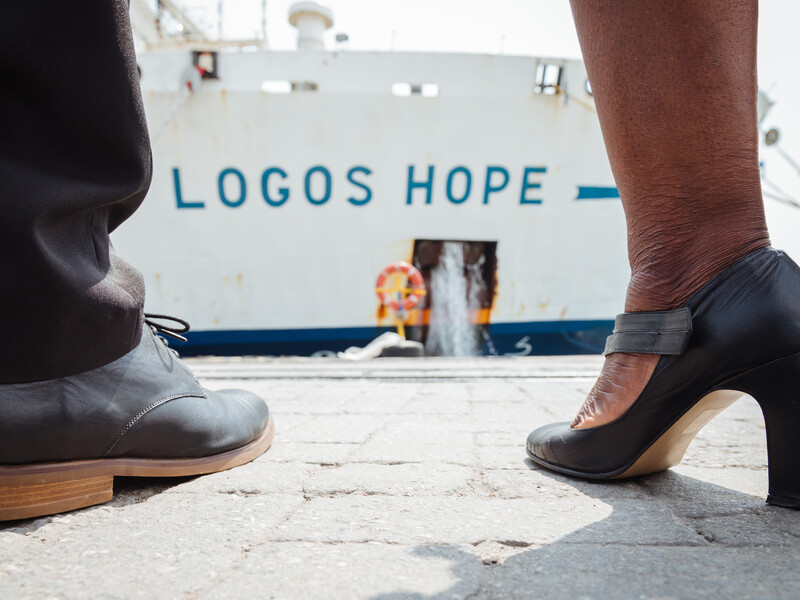
Through repeat visits to a West African port, OM’s Ship Ministry partners with a local pastor for ongoing impact and community transformation.

"In my family, traditions and cultural barriers could not keep the love of Jesus from breaking through," I'Ching Chan-Thomas shares.
"Today, it is still the ‘OM way’ to welcome people who want to love God and love others around the world, equipping them with the knowledge, skills and attitudes they need to thrive in mission," Tami says.
Paul shares what fuelled his motivation to support believers in areas of Asia where it is hard to follow Jesus. He hopes their stories will inspire someone to catch the vision for helping equip the church in this region.