author
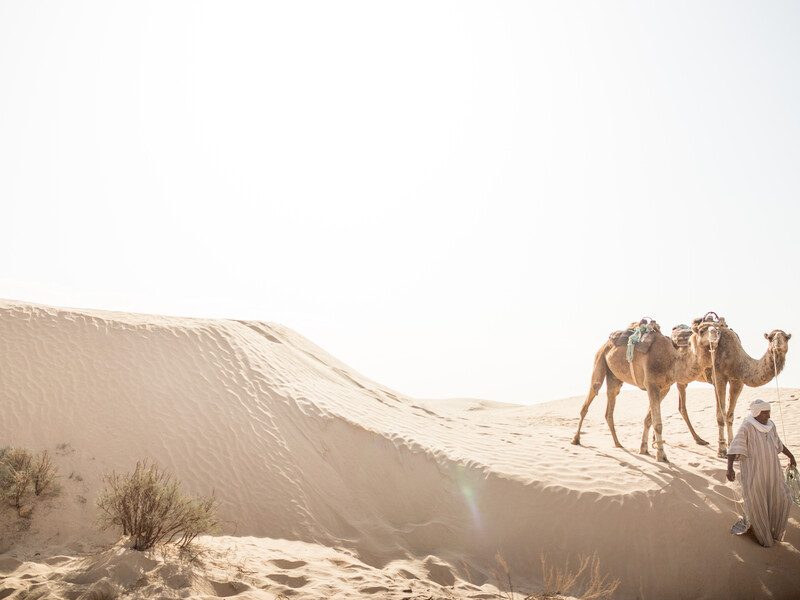

A Somali man walks alongside a camel loaded with precious cargo. He looks west towards the setting sun, pats the animal on the neck and turns to the south.
In the ancient past, camels transversed continents, carrying fabrics, spices, incense, herbs and more. Specifically designed to thrive in desert conditions, the pack animals can travel over rough terrain, through extreme heat and dust, with limited water. Their ability to do so while carrying heavy loads earned them the nickname: ‘The Ships of the Desert.’
As the man follows the sun’s path, he smiles. News of rain near the Indian Ocean had reached him, and now he would travel there in hopes of finding more than good grazing in the area. Hopefully, the people he sought would be there as well.
Today in the Horn of Africa, camels, while not used to transport cargo and people in caravans as they used to, are just as important to people’s livelihoods as they have been for millennia.
Specifically in Somalia, there are nomads whose lives centre around the animal, selling its milk, meat and hide. “Many Somalis are nomadic camel herders,” says Rev. Aaden*, a leader of a partner ministry in the Horn of Africa. “They treasure camels very much. Somalia has a lot of camels.”
Nomadic camel herders are also one of the most neglected communities in terms of being reached with the gospel. This is because camel herders travel throughout the Horn, following the recent rains in order to graze their camels. Since there is no set pattern to their travels, it is almost impossible to find a specific group of herders a second time. Visitors can leave a community for a few days and then return to the area, to find everyone packed up and gone, with no trace left behind and no idea which direction they went.
“Even local Somali believers don’t know how to reach them. But several years ago, a group of Somali believers agreed that something needed to be done,” shares Rev. Aaden, who was part of the group. “We agreed that we couldn’t focus only on people who live in big cities. We needed to also go to the nomads. But how do we do it? That’s how the idea for the camel library came to be.”
Rev. Aaden shares that the literacy rate among camel herders, much lower than the literacy rate for the average Somali. The idea for the camel library is twofold, states Rev. Aaden: “One, to increase the literacy rate by teaching camel herders how to read and write. Two, we have found in Somali culture that people who can read and write are more likely to follow Jesus than those who can’t. So, our camel evangelists set out to find these communities in the desert in order to teach camel herders out to read.”
While Open Doors ranks Somalia as the second-most persecuted church in the world, Operation World calls it the seventh-fastest-growing Church on earth. And whereas most Somalis are Sunni Muslims, camel herders are mostly traditional, Sufi Muslims.
Aaden, a Somali follower of Jesus since age 18, has been sharing the love of Jesus in the Horn of Africa for 27 years. “I am especially passionate about nomadic, Muslim, camel-herding communities, because the ministry is effective. The herders like the visiting libraries, which contain secular books with good values. While our camel evangelists are teaching, they are [also] figuring out if someone is open to hearing the gospel.
“Camel herders themselves don’t have enmity with the gospel. There is no hatred; in fact, there is interest. It’s amazing how they respond as they consider the cost. They ask things like, ‘If I follow Jesus, I could lose everything. Who would marry my daughter if I became a Christian?’ Or, ‘If I follow Jesus, do I need to be sedentary? Or can I also still follow my camels?’
“We say that you can still follow Jesus and be a nomad. In fact, a nomad makes a great evangelist, because they are always on the move and live sustainably: camels produce well so numbers increase annually, and they can sell milk to survive.”
While camel libraries as tools for sharing the gospel are a recent ministry, they are not a new concept. The idea came from a comment made to a British missionary, Dr. Malcolm Hunter, in the 1970s, who asked a camel herder, “What would it take for a camel herder to follow Jesus?” The herder replied, “When you can put the church on the back of a camel.”**
Fifteen years ago, a group of Somali believers set out to do this. They purchased camels, trained Jesus followers to specifically go to the nomadic herding community and sent them off. Now those believers also carry solar-powered smartphones loaded with Bible study materials.
However, the very first record of a Somali camel herding ministry preceded Dr. Hunter. In the 1930s, John Ethelstan Cheese (1877-1959), an Anglican priest based in Nairobi, Kenya, and later Addis Abba, Ethiopia, walked across Somaliland all the way to Somalia, travelling with camel herders on year-long journeys. He reported a few camel herders following Jesus in the 1940s, but then they parted ways and contact was lost.
“This was the last record of Somali camel herder believers until 2013. Since then, at least 10-15 camel herders have decided to follow Jesus,” declares Rev. Aaden. “But it could be more now, as all of our records are a year old due to the nature of nomadic communities.”
The ministry behind the camel libraries is partnering with OM to purchase both camels and library books. “This is the backbone of the ministry. We are praying and working expectantly for 250,000 adult Somalis to follow Jesus in the next nine years. We want to train 500 believers who will each train 10 others. That will make 5,000 adult believers trained to share the gospel with camel herders. Then we are praying each one will lead 100 adults to follow Jesus by 2035.
“This ministry goal is achievable with the help of the Holy Spirit. It isn’t impossible or crazy. Nomadic ministry is sustainable because if you purchase 100 camels, in 10 years you will have a few hundred, and their milk can be sold for sustainability. The gospel is on the move in the Horn of Africa — carried on the backs of camels.
“And our library camels will not be sold, killed or eaten. We will retire them with honour. If one breaks its leg, we will care for it. These will be the first camels in the Horn of Africa with a pension and retirement plan, because so many people will come to the Lord through them. We will treat them with honour, dignity and gratitude.”
Please pray for this vision and ministry partnership in seeing 250,000 Somali adults follow Jesus by 2035. Pray for those who are discipling, training and sharing the gospel with Somali camel herders.
*name changed
**sources available upon request
Share On Your Socials
What began as a physical act of service has had a great impact on a refugee community in the suburbs of Atlanta — leading to the opening of doors and hearts to the gospel.

Steve and Jane Pemberton (Australia) experience the joy of giving back to God through offering what He has given to them.

When Emily (Singapore) realised that God knew her name, she chose to follow Him. Now she shares the same truth with her students in East Asia.

Petrus and Maria (South Africa) were led to radically give towards the needs of a family in Israel, not knowing how God would provide for themselves—and were blessed over and abundantly beyond what they hoped or even asked for.

By asking God to lead him every day, Roberto (Argentina) is seeing God do amazing things in his community.


From North America to Southeast Asia, Joshua* has seen God’s love change lives in deeply personal—and lasting—ways.
The McCourtney family has seen how God is the gardener in their lives and the lives of others in Montenegro.
Leaving Latin America for Israel, the Navarez* family never expected some of the people God would lead them to in the country would be Latinos.
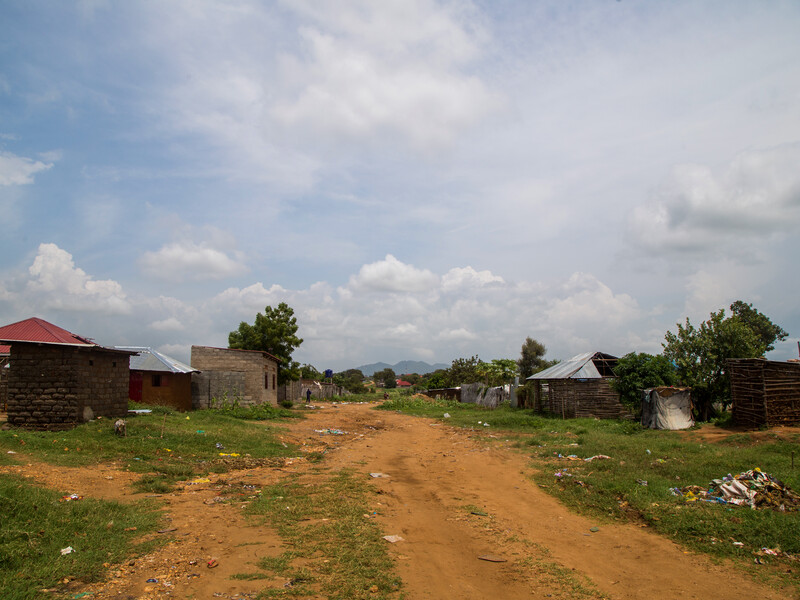
South Sudan, the world’s youngest country, has great poverty, civil unrest and a rapidly growing Church.
One moment of obedience led to two men choosing to follow Jesus — despite the possible cost to their livelihoods.
Having experienced God’s love and power personally, Manuel shares the gospel with everyone he meets in Israel.