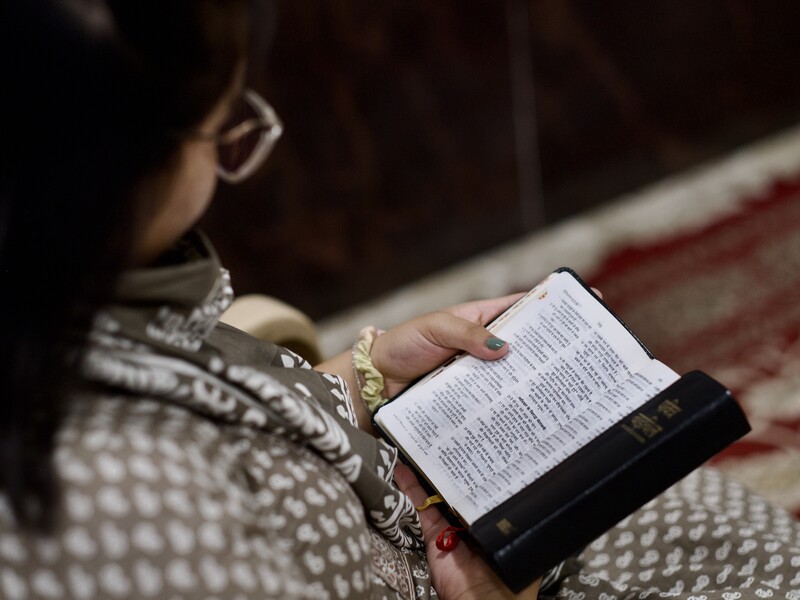
Within the span of a few generations, truth as an arbiter of reality has been assailed, deconstructed, distorted and devalued to the point where its existence and authority in the affairs of mankind are challenged. Once considered absolute, truth is being replaced by relative truth, rationalisation, contextual truth or personal, private truth that owe no accountability to anyone, especially Almighty God. We hear phrases such as “my truth” or “follow your truth” in media, self-help books and on social media.
The consequences of abandoning truth as a reflection of and determiner of reality are seen and felt throughout our global society and within our souls: Our moralities, philosophies, ethe and eternal hopes are being set adrift without anchorage or rudder. Morality becomes relative and ethics subjective. As followers of Jesus, who declared, “I am the way, the truth and the life” (Jn.14:6, NIV) — not one among many — we must subject ourselves to the truth in all we think, say and do.
Various forces — including our internal biases — influence how we interpret reality. Relativism posits that truth is subjective, personal and/or cultural. With no objective standards, the manipulation of messages becomes the accepted norm. Postmodernism emphasises the diversity of perspectives and narratives to the point of undermining overarching truth with deep skepticism. And if truth is determined by individuals or cultures, those with power get to determine what is true: Propaganda and manipulation are used by powerful individuals, institutions and ideologies to control information and influence public opinion. Lack of critical thinking hinders individuals from discerning the truth. Ignorance and gullibility allow false narratives to take root.
Modern communication, particularly social media and political television, make no effort to confirm truth. Rather, they spread lies, deceit, fear and suspicion masquerading as new truth and any other position as fake. Lies told often enough become the so-called truth. If you rely exclusively on only one source, you cannot gain a broader perspective or understand diverse viewpoints before forming conclusions.
In our quest for reality, we must first scrutinise our own personal commitment to upholding truth in all situations. This requires humility, discernment, a commitment to seeking objective evidence and multiple perspectives, a willingness to confront our own biases and to challenge prevailing narratives.
To expose the affront to God caused by the spread of lies and deceit, we must actively engage in critical thinking and fact-checking. As believers, we are called to be discerning and to test everything against the truth found in God's Word. When engaging in conversations, the phrase "Can I be honest with you?" suggests that the person may have not been truthful or transparent beforehand. We should approach such conversations with grace and openness, inviting honest and respectful dialogue.
Mini-proverbs on truth
-
If you tell the truth, you don't have to remember anything you said or wrote. This frees up memory for God’s Word and purposes, since facts and reality need no maintenance.
-
If you lie, keeping track of what you said where, when, why and to whom is exhausting and unsustainable. A person who always speaks truth will not always be liked but will be trusted.
-
Anyone who is careless with truth (e.g., gossipers) cannot be trusted.
-
If you tell the truth, it becomes a part of your past; if you tell a lie, it becomes a part of your future.
-
The truth is still the truth, even if no one believes it. A lie is still a lie, even if everyone believes it. Myths can be more dangerous than lies.
-
Whenever you hear or read anything you suspect to be false, ask, “Has that been tested or proven?”
-
You may not tell everything you know, but everything you tell should be true.
-
Don’t associate with any person or group that is careless about truth.
Paul never wavered from speaking truth as a revolutionary act, saying, “We have renounced secret and shameful ways; we do not use deception, nor do we distort the word of God. On the contrary, by setting forth the truth plainly we commend ourselves to everyone’s conscience in the sight of God” (2 Cor. 4:2, NIVUK). To guide our thinking, he instructs us to meditate on “whatever is [firstly] true, whatever is noble, whatever is right, whatever is pure, whatever is lovely, whatever is admirable” (Phil.4:8, NIV) — but truth first, always.
In a world where falsehoods spread rapidly, we must be agents of truth, shining light on deceit and misinformation. By exemplifying honesty, integrity and a commitment to seeking truth, we can challenge the prevailing culture of new truth and fake news. Let us be diligent in pursuit of truth in a world longing for authenticity and genuine connections.
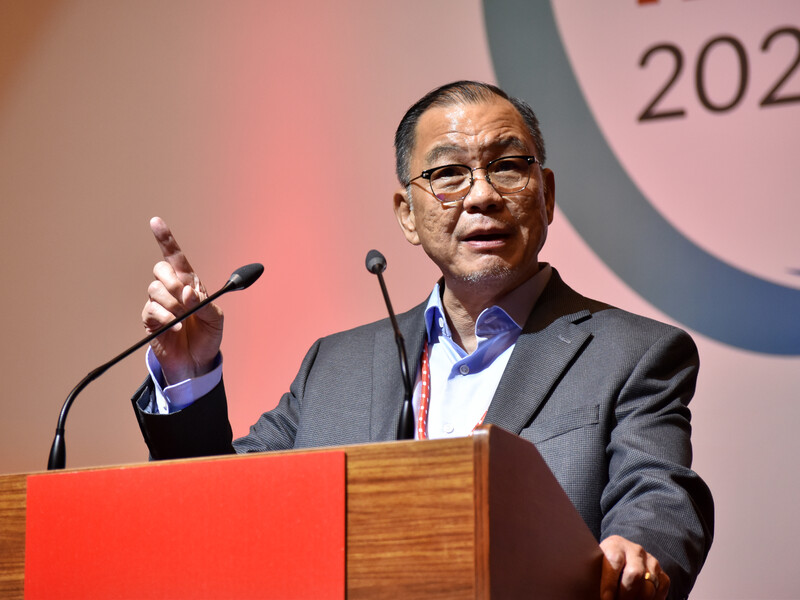
Lawrence Tong, from Singapore, is OM’s international director, cultivating the vision and providing guidance to the Global Leadership Team. He studied communications and has a master’s degree in business administration. He loves seeing individuals living abundantly for God. He started serving with OM in 1978 when he joined Doulos and met his wife, Susan. He spent five years each on OM’s ships, Logos, Logos II and Doulos: worked in the ship’s head office in Mosbach and served as the director for OM in China and Taiwan. His excitement to see vibrant communities of Jesus followers within walking distance of everyone on Earth is what propels him into motion daily.