
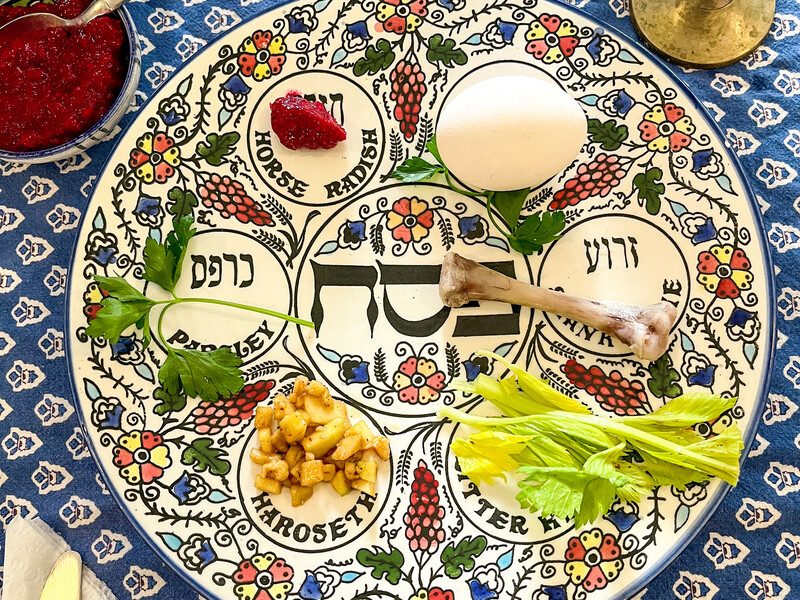

“And when your children ask you, 'What does this ceremony mean to you?’ then tell them,‘It is the Passover sacrifice to the Lord, who passed over the houses of the Israelites in Egypt and spared our homes when he struck down the Egyptians.” Then the people bowed down and worshiped.” Exodus 12:26-27 (NIV)
As a child, I never thought to ask my parents why we hid plastic eggs in the garden, or why we ate chocolate in the shape of a bunny or why we dyed boiled eggs different colours. It never occurred to me that these had any meaning beyond the fun we had as a family. Growing up in a nominal Catholic family, we kept a lot of traditions, but we did not grasp their significance, and, although I was as curious a child as any other, I never asked why with regard to our religious traditions. I do not remember anyone in our family really discussing why we did the things we did. Somewhere along the way, we forgot the original meaning of the things we were doing.
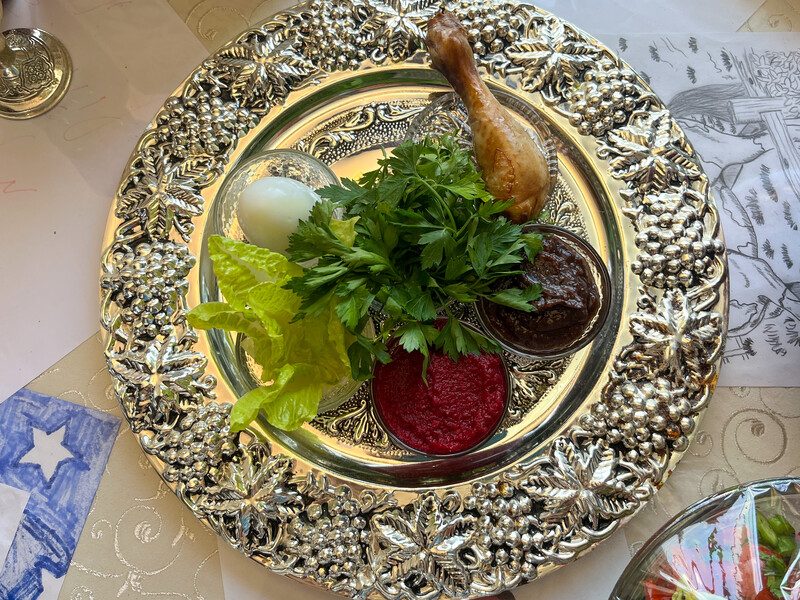
Passover observance in modern-day Israel
It is normal that the further away in time you get from an event, the more gets lost. It goes without saying that the ten plagues of Egypt and the crossing of the Red Sea would have been impossible to forget for that first generation of Israelites. How could they forget the night they slaughtered the first Passover lamb and applied the blood on the top and sides of the doorframes of their home? Suspense and terror must have struck the hearts of all living in Egypt as the Lord struck down the firstborn of the Egyptians but passed over the houses of the Israelites. As unforgettable as an event as that was, God knew that it would be only a matter of time before His wondrous deeds were forgotten. So, God made the festival of Passover to be celebrated each year.
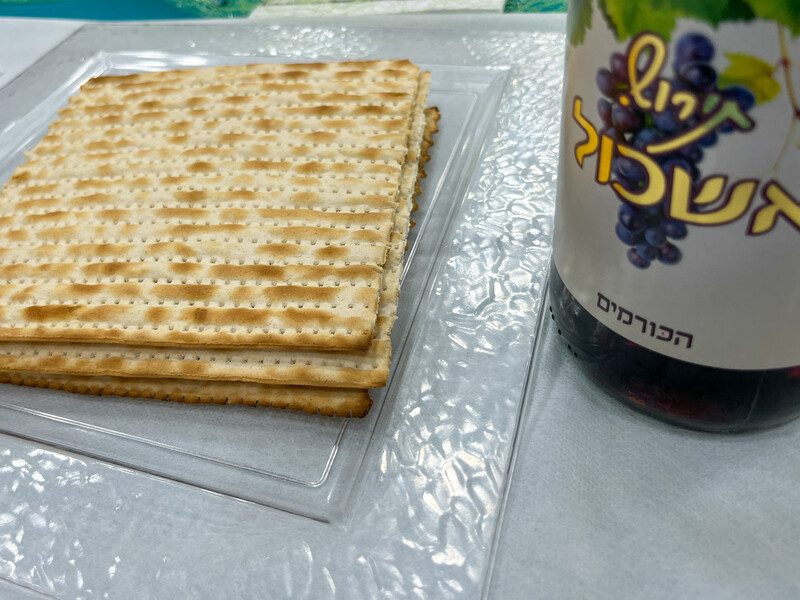
Passover was not something I celebrated until I moved to Israel. It was not long before I understood why Israelite children might be more likely to ask a version of “Why are we doing this?” First all, the leaven needs to be removed from the home starting a week before, an intensive cleaning process. Instead of nice soft bread, matzah (unleavened bread) is eaten for seven days. Grocery stores actually either remove leavened bread from their shelves altogether or cover whole aisles with large sheets of paper so that no one buys bread or anything that goes on or with bread, like jams, spreads, etc. Even Gentiles cannot purchase these items in these stores during that time.
Further, during the Passover seder**, this matzah (unleavened bread) is to be eaten with bitter herbs. How can a child eat freshly grated horseradish mixed with vinegar, sugar and beets without asking, “Why we are doing this?”
As with most religious holidays, it is true that through the generations, traditions have been added or changed from how the Passover was originally celebrated. For example, because there is no Temple or priesthood as there were in Biblical times, there is no longer a sacrifice of the Passover lamb for every household. However, any participant in a Passover seder would affirm that remembering the miraculous removal of the Israelites from slavery in Egypt remains central to the traditions.
Almost 1,500 years after the first Passover in Egypt, the long-awaited Messiah reclined at the table with twelve disciples and said to them, “I have eagerly desired to eat this Passover with you before My suffering” (Luke 22:15). He gave thanks and broke the bread, “This is my body given for you; do this in remembrance of me” (Luke 22:19b).
On that night, that would later come to be called the “Last Supper”, Jesus lifted up the cup saying, “This cup is the new covenant in my blood, which is poured out for you” (Luke 22:20b). Within about twelve hours, Jesus’ body was brutally beaten and crucified, affirming John the Baptist’s prophetic proclamation, “Behold the Lamb of God who takes away the sins of the world” (John 1:29).
All the disciples of Jesus from that day on would come to associate Passover, the celebration of being set free from slavery to Egypt, with the freeing from slavery to sin and death of all those who by faith have become children of God.
In the years to come, the apostles would surely have gathered for Passover celebrations. I wonder how they would have responded if a child in the room were to ask, “What does this ceremony mean to you?”
What Passover and the Lord’s Supper mean to me
It was a summer night in North America, and the gospel had just been boldly and clearly proclaimed. A call went out to whoever would want to come forward and receive this great gift of redemption, freedom and forgiveness that the Lord Jesus the Messiah purchased on the cross. I came forward with the revelation that I was a sinner in need of a merciful Saviour. I realised that without Jesus’ sacrifice on the cross, I was headed for judgement and destruction. That night, the salvation of the Lord was not some distant story that took place thousands of years ago. That “today” was the day of salvation for me.
Now, when I take communion, I meditate on what it means to me. The same Lord who saved ancient Israel, the same God who saved the world through sacrificing His only Son, is the same God who saved me. The LORD who brought the Israelites out of Egypt and redeemed then, is the Lord who freed me from slavery to sin and redeemed me.
This is the same God who is coming back again to redeem all things. Less than two per cent of Israel today are believing Christians. Many throughout Israel have forgotten the true meaning of Passover. For many Jews the Passover has become nothing more than culture or tradition. Close to half of the Jewish population are secular, one-third define themselves traditional, and only the remaining fifth are religious.
In addition, around twenty-one per cent of Israel’s population are Arab and most of them are either nominal or practising Muslims, meaning they do not know God’s salvation for themselves.***
As we celebrate the sacrifice of the ultimate Passover Lamb this Good Friday, His redemptive work on the cross for us and His overwhelming victory over sin and death through resurrection, may we remember those around the world who do not know Him. Those who practice traditions that do not have to do with the life-transformative significance of this day — and those who do not observe it at all, because they do not know God’s salvation for themselves.
Pray the Jewish people, both in Israel and throughout the world, will understand the meaning of their traditional seder, both in past physical salvation of their people from slavery, but also the Messianic prophecies and meanings woven throughout the service.
Pray for the Gentiles in Israel, for Israeli Arabs (both Muslims and nominal Christians) to realise God’s love and salvation is for them.
Pray for the Jewish, Arab, and other Gentile believers to share their faith and its relevance to this season.
*name changed
**A seder, meaning “order”, is the traditional Passover meal that includes specific foods and an order of service that is based, at its roots, on Scripture.
*** https://www.cbs.gov.il/he/mediarelease/DocLib/2024/409/11_24__409e.pdf; https://en.idi.org.il/arab-society/2023/?chapter=55095
Share On Your Socials

Gabriel equips local believers to share their faith in a world of division and conflict in Israel.

Petrus and Maria (South Africa) were led to radically give towards the needs of a family in Israel, not knowing how God would provide for themselves—and were blessed over and abundantly beyond what they hoped or even asked for.
Leaving Latin America for Israel, the Navarez* family never expected some of the people God would lead them to in the country would be Latinos.
"It was not until I came to a Jewish understanding of the Bible, however, that I realised the true meaning behind Easter," shares Gersham.
One moment of obedience led to two men choosing to follow Jesus — despite the possible cost to their livelihoods.
Having experienced God’s love and power personally, Manuel shares the gospel with everyone he meets in Israel.
As the biblical feast of Passover approaches, Alicia shares the event’s personal significance for her family, as well as the global family of believers.
By opening their home and inviting others to join them in studying the Bible, Esau and Alicia have seen God multiply their investment in hospitality.
As the biblical feast of Passover approaches, Abigail* shares the celebration's significance as revealed in Scripture.

An OMer in Israel reflects on what it means for Jesus to be the hope of all the world.